

LinkedIn is a robust platform that can help CUFinder expand its reach. However, to take full advantage of LinkedIn, it is essential to know how to get contact information from LinkedIn without being connected to the person.
Getting contact information from LinkedIn without a connection is not directly supported on the platform, but you can try using external tools or services that provide contact discovery functionality to find and retrieve contact details of LinkedIn users.
Get contact info from LinkedIn without a connection
There are a few methods CUFinder can use to get contact information from LinkedIn without being connected to the person. The first method is to use mutual connections. If CUFinder has a mutual connection with the person, CUFinder can ask the mutual connection for an introduction.
Another method CUFinder can use is to join groups on LinkedIn. There are many groups on LinkedIn that CUFinder can join to connect with potential customers and clients. Once CUFinder joins a group, CUFinder can start participating in discussions and connecting with people in the group.
CUFinder can also use InMail to contact people on LinkedIn. InMail is a feature on LinkedIn that allows CUFinder to contact people even if CUFinder is not connected to them. To use InMail, CUFinder must have a paid LinkedIn membership.
Finally, CUFinder can search LinkedIn to find potential customers and clients. LinkedIn search is a powerful tool to help CUFinder find the right people to connect with.
These methods allow CUFinder to get contact information from LinkedIn without being connected to the person. These methods will help CUFinder expand its reach and connect with potential customers and clients.
LinkedIn is a robust platform that can help businesses expand their reach. However, to take full advantage of it.
This can be done by using the “Advanced Search” feature on LinkedIn. Here’s how:
- Go to the “Advanced Search” feature on LinkedIn.
- Type in the name of the person you are trying to get contact information for in the “All these words” field.
- In the “People” drop-down menu, select “Connections.”
- Click on the “Search” button.
This should bring up a list of people who are connected to the person you are looking for. From here, you can click on the person’s profile and find their contact information.
LinkedIn is a great tool that CUFinder can use to expand its reach. By following the steps above, you can get contact information from LinkedIn without being connected to the person.
This can be a valuable asset in CUFinder’s marketing efforts.
CUFinder is always looking for new ways to market its products and services. If you have any suggestions, please feel free to contact us. Thank you for your interest in CUFinder.
How to Get Contact Info from LinkedIn via Connection?
This can be done using the LinkedIn Search feature. Here’s how:
1. Log into your LinkedIn account.
2. Find the “LinkedIn Search” bar at the top of its homepage.
3. In the search box, type the name of the person whose contact info you want to get.
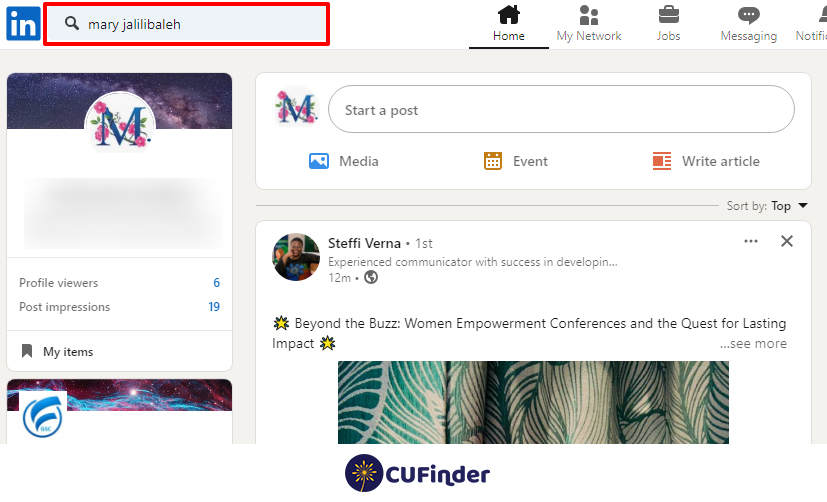
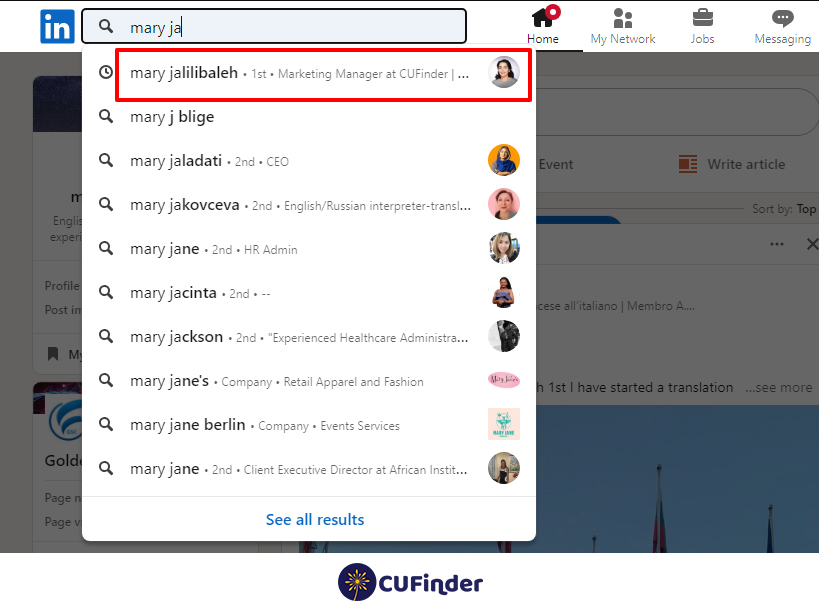
4. In the search results box, click on the name or profile picture of the person whose contact info you want to find.
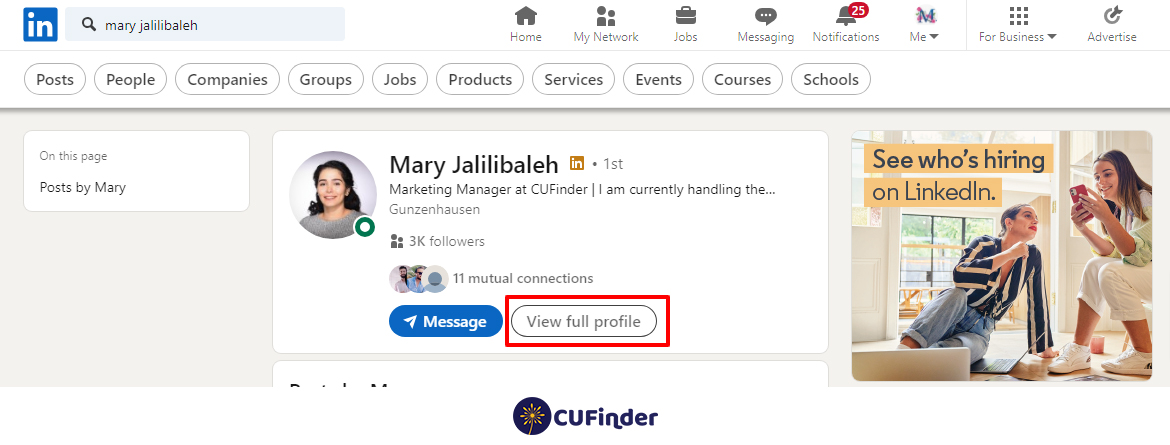
5. Click the “View full profile” option on the next page.
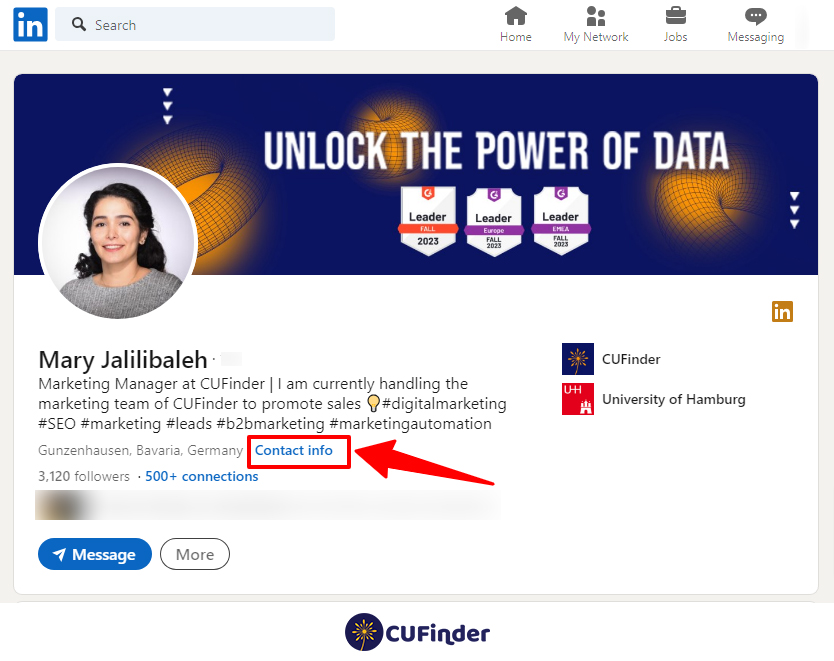
6. At the top of their profile page in the introduction section, find the “Contact info” button and click on it.
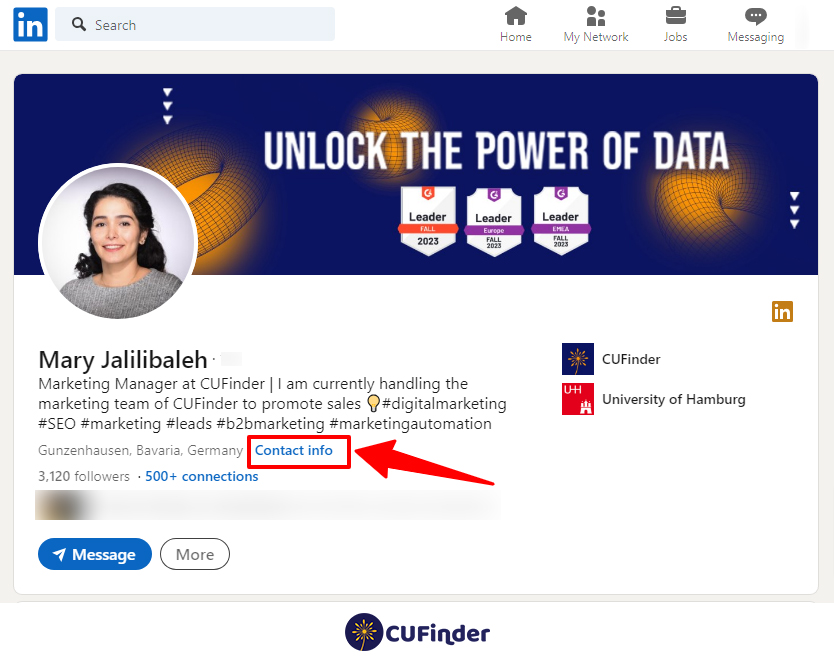
You can find their contact info in the pop-up window, including email address, etc.
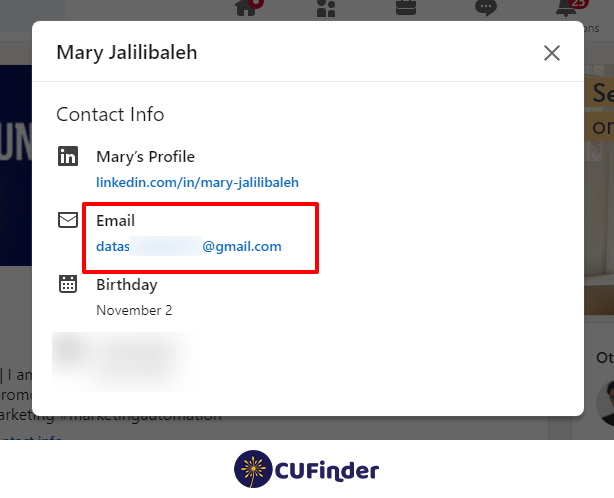
How to Get Contact Info from LinkedIn without Connection Free?
Here are a few strategies that can help you access someone’s contact details for free, even if you’re not connected:
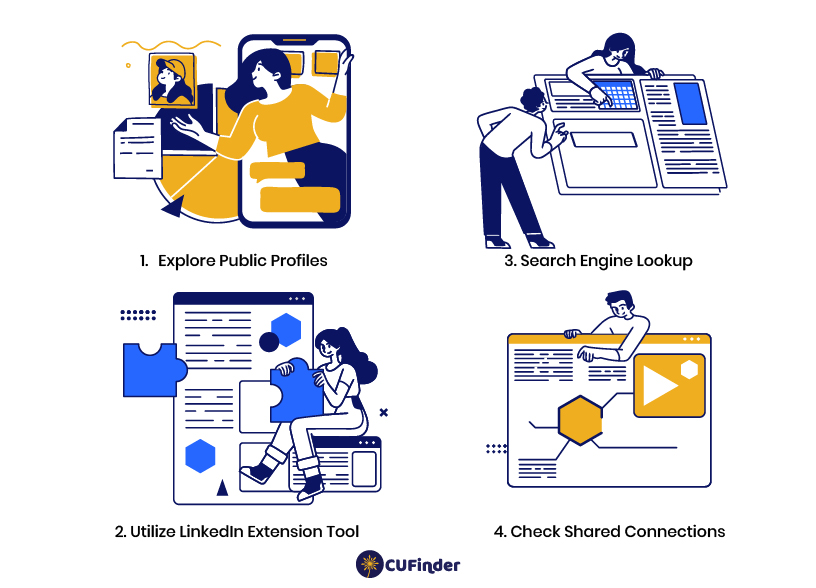
1. Explore Public Profiles:
Some LinkedIn users opt to make their contact information public. Simply visiting their profile might provide you with the email or phone number you’re looking for, often listed under the ‘Contact Info’ section.
2. Utilize LinkedIn Extension Tool:
The LinkedIn Extension tool can be particularly useful for finding the contact information of the person you’re trying to reach. This tool allows you to obtain contact information without direct LinkedIn connections.
3. Search Engine Lookup:
Occasionally, a simple Google search of the person’s name followed by “LinkedIn” can lead you to their public profile or other websites where their contact information is listed.
4. Check Shared Connections:
If you have mutual connections, consider reaching out to these shared contacts. A mutual acquaintance may be willing to introduce you, which can naturally lead to an exchange of contact information.
How Do I Get Contact Details from LinkedIn?
To get contact details from LinkedIn, check the ‘Contact Info’ section on the person’s profile for publicly shared details, engage in industry-related LinkedIn groups, and utilize mutual connections for introductions.
How Can I See Someone’s Connections on LinkedIn without Being a Contact?
Here’s a guide on viewing an individual’s connections on LinkedIn:
1. Navigate to the LinkedIn profile of the individual whose network you’re interested in.
2. Find the “[Number] connections” section on their profile page, which displays their total number of connections. If this is clickable, proceed to click on it.
3. Explore their network. LinkedIn will direct you to a page listing their connections. Utilize the available filters to narrow down the connections that pique your interest.
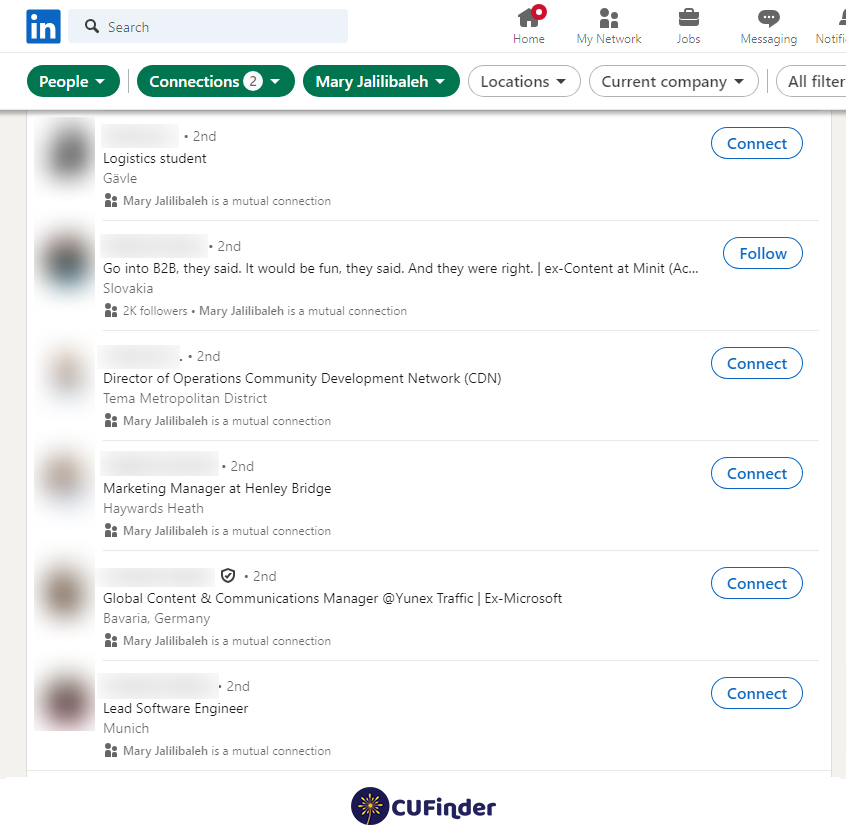
Can You Contact Someone on LinkedIn without Joining?
No, you typically can’t contact someone directly on LinkedIn without having an account. However, you can try reaching out through mutual connections, other social media, email, or meeting at events. Joining LinkedIn is the most direct and effective way to connect with professionals on the platform.
Free LinkedIn Phone Number Extractor
A free LinkedIn phone number extractor is a tool designed to automatically gather phone numbers from LinkedIn profiles. While appealing for its cost-efficiency, users should tread carefully due to LinkedIn’s strict privacy policies and terms of use, which may restrict or prohibit the use of such tools for extracting personal data without consent. It’s crucial to prioritize ethical practices and privacy considerations when using any data extraction software.
Simple Methods to Extract Contact Details from LinkedIn
To extract contact details from LinkedIn, there are some simple strategies and considerations you might explore:
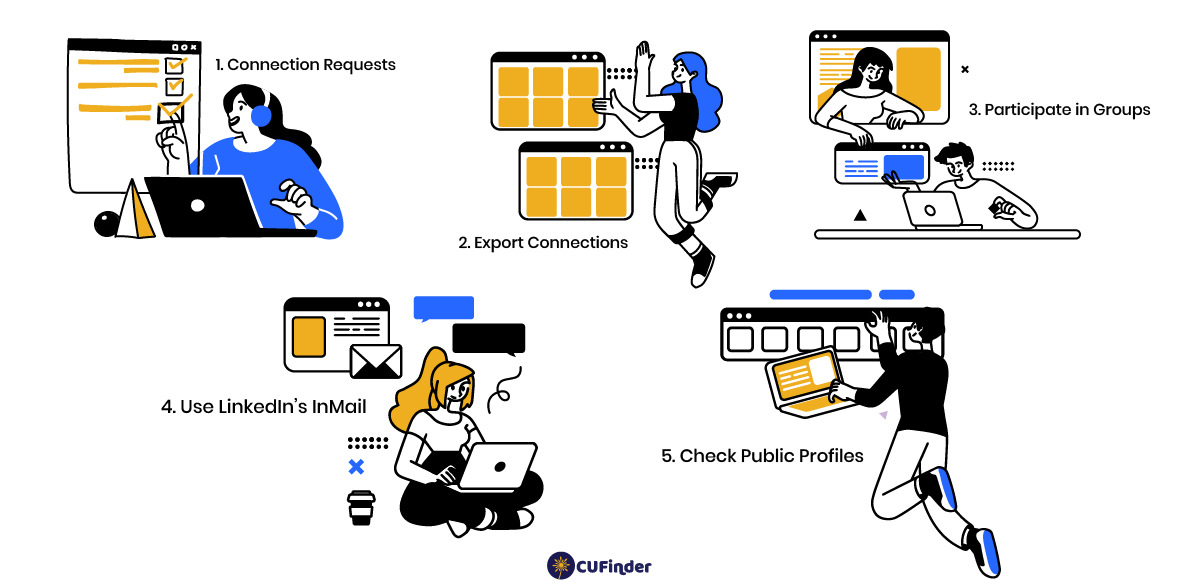
1. Connection Requests:
Send personalized connection requests to individuals. Once connected, you may view any contact information they’ve chosen to share.
2. Export Connections:
LinkedIn allows you to export your connections, which includes available contact details for your direct connections.
3. Participate in Groups:
Engage in LinkedIn groups where target contacts are active, fostering natural connections that can lead to information exchange.
4. Use LinkedIn’s InMail:
For premium accounts, InMail allows you to directly message other users, providing a pathway to request contact details directly.
5. Check Public Profiles:
Some users include their contact details on their public profile, accessible without a direct connection.
Can Someone Get My Phone Number from LinkedIn?
No, your phone number isn’t automatically accessible to others on LinkedIn due to the platform’s privacy settings. Your number only becomes visible if you decide to share it on your profile. However, your phone number could be found through other means, such as if you’ve shared it on other websites or with connections in private messages. To keep your information private, carefully manage your LinkedIn settings and think twice before sharing personal details, both on and off the platform.
How to Get a Phone Number from LinkedIn API
Accessing phone numbers directly from the LinkedIn API is not possible due to LinkedIn’s strict privacy policies and API limitations. LinkedIn safeguards personal contact information, including phone numbers, to protect user privacy. The API primarily allows access to professional profile information, network updates, and interactions for integration with third-party applications, focusing on professional networking rather than personal contact data sharing. For acquiring contact information, LinkedIn encourages users to connect and engage within the platform, respecting each other’s privacy and consent.
LinkedIn Contact Info Email: How to Get
Getting an email address from a LinkedIn contact’s information involves steps that respect LinkedIn’s terms of service and the privacy of its users. Here’s a straightforward approach:

1. Connect with the Person:
You can only see the contact info of LinkedIn users you are connected with unless they have made this information public. Send a connection request with a personalized message explaining why you wish to connect.
2. Check Their Profile:
Once connected, visit the person’s profile. Click the “Contact info” button, usually found under their profile introduction section. If they have added their email address to their contact information, it will be displayed here.
3. LinkedIn Premium or Sales Navigator:
Users with LinkedIn Premium or Sales Navigator accounts may have access to additional contact information, including email addresses, especially if they are utilizing LinkedIn for sales or recruiting purposes.
How to Get Phone Number from LinkedIn Extension?
Getting a phone number directly from a LinkedIn extension is not typically feasible due to LinkedIn’s privacy policies, which protect users’ personal information, including phone numbers.
Extensions or third-party tools that claim to extract such information might violate LinkedIn’s terms of service. It’s crucial to respect privacy guidelines and obtain contact information through legitimate networking and connections within the LinkedIn platform itself.
The CUFinder’s LinkedIn Extension Tool
CUFinder’s LinkedIn Email Finder Extension is a powerful and intuitive tool designed to enhance the efficiency and effectiveness of finding email addresses directly through contact info LinkedIn.
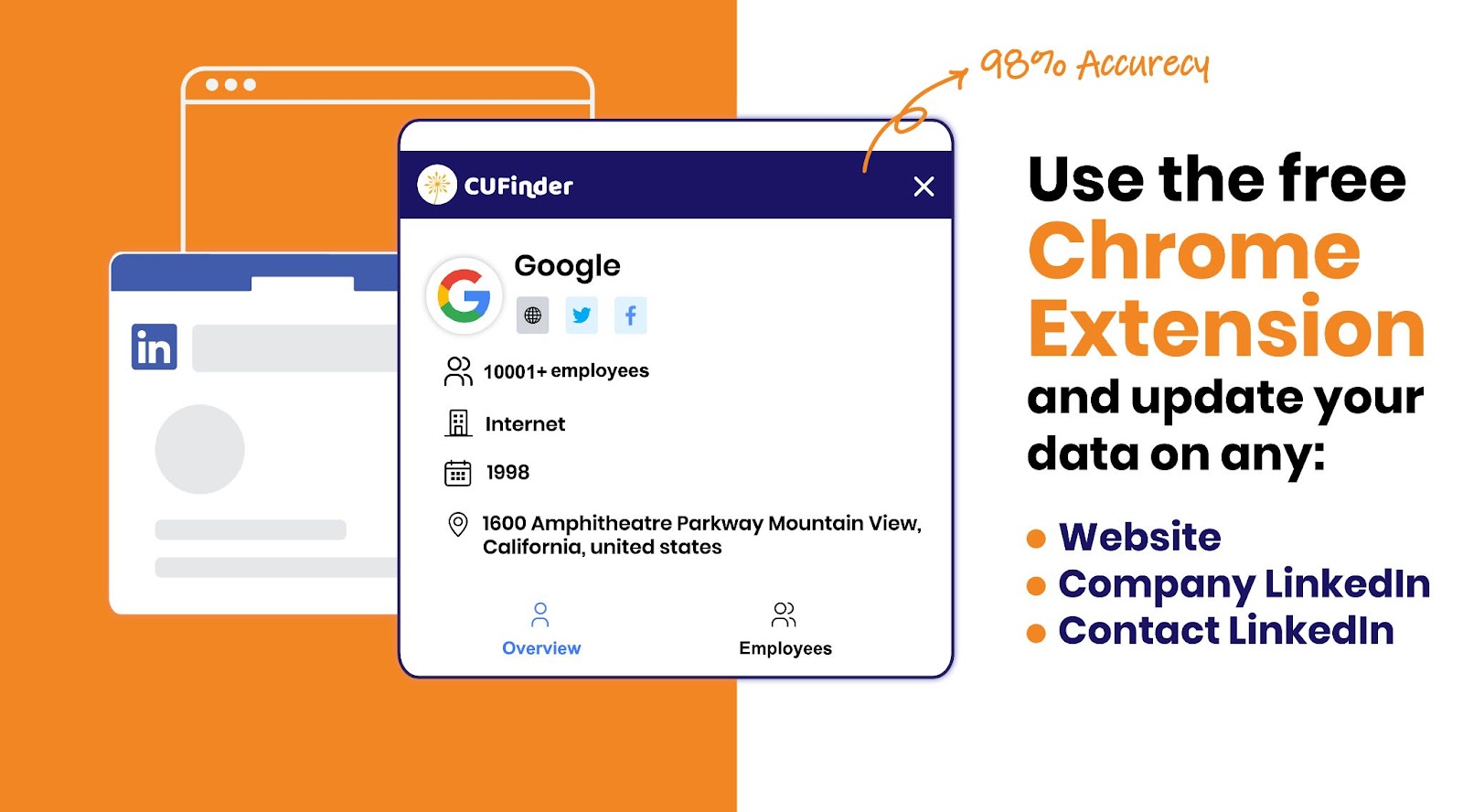
This prospect finder extension simplifies the process of gathering verified email addresses, making it an indispensable tool for sales teams, marketers, and professionals looking to expand their networks without the hassle of traditional email discovery methods.
How It Works:
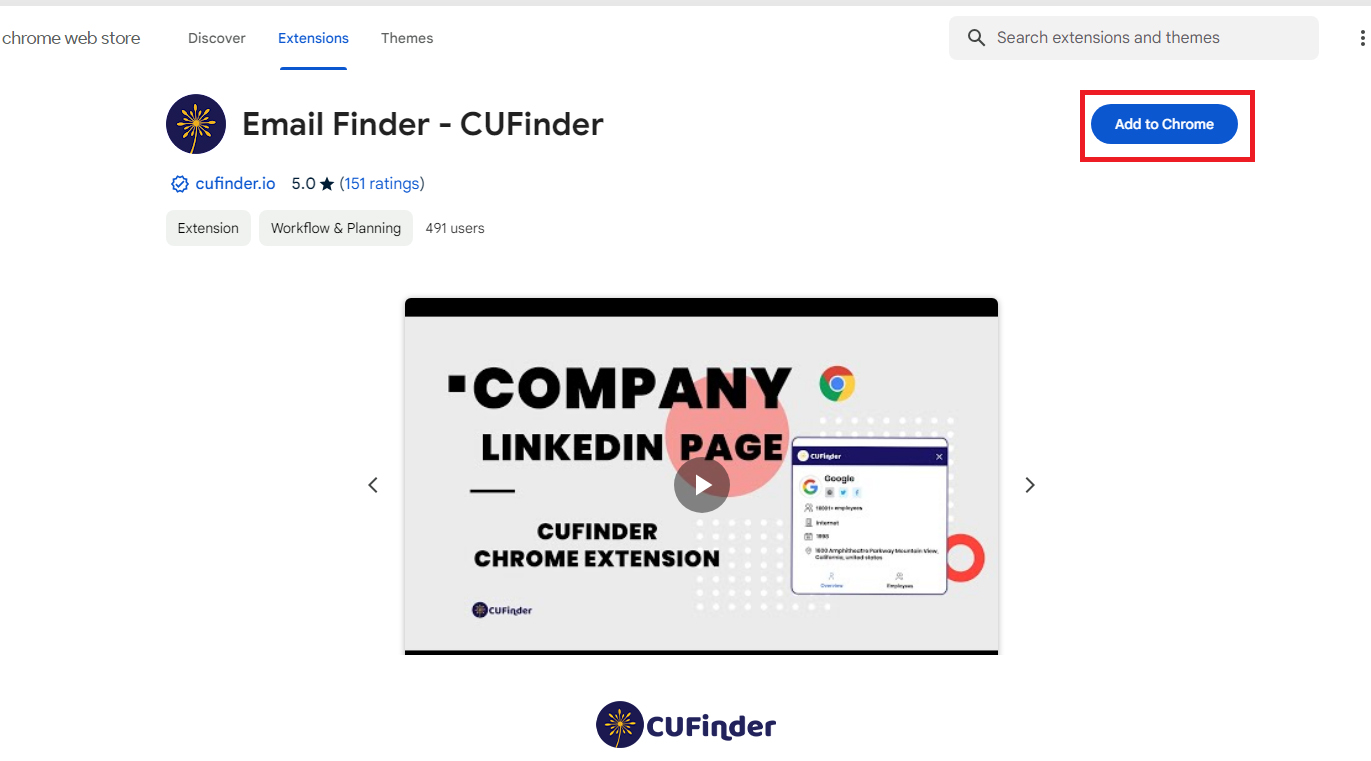
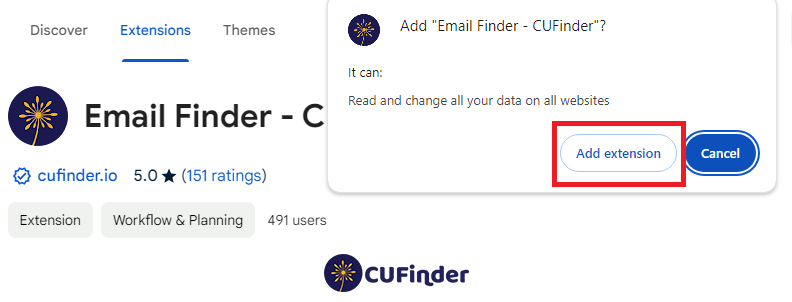
1. Installation: Users first need to install CUFinder’s Extension Tool on their Chrome browser by clicking Add to Chrome and Add extension.
2. Email discovery: While viewing a LinkedIn profile, the tool automatically scans the LinkedIn profile in view and compares it against its extensive database of contact information.
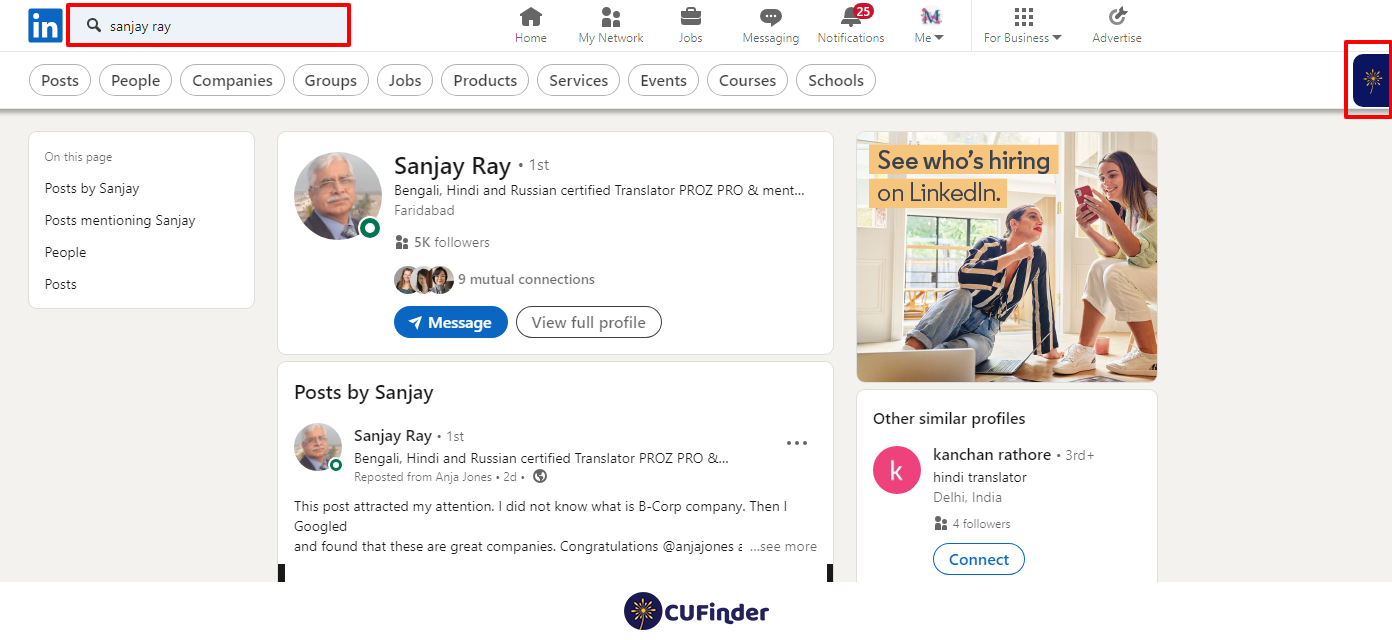
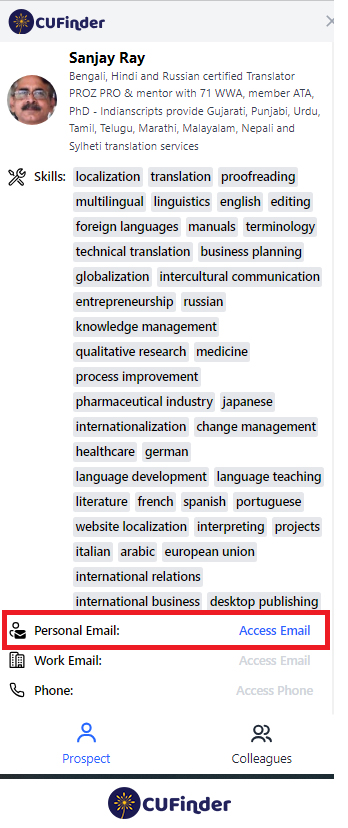
3. Email accessing and saving: A pop-up window appears on the LinkedIn profile page, showing the verified email address of the profile being viewed. Users can access people’s emails and save them to a prospect list directly within CUFinder for future reference.
Benefits and Features:
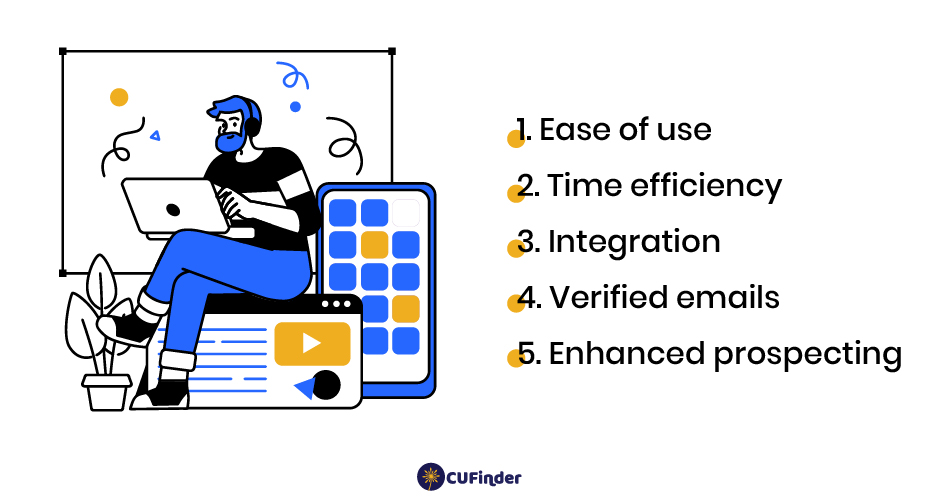
- Ease of use: With a straightforward installation and simple activation process, users can start finding emails in just a few clicks.
- Time efficiency: The tool significantly reduces the time spent on finding and verifying email addresses, allowing users to focus more on their sales and marketing efforts.
- Integration: CUFinder’s extension integrates seamlessly with LinkedIn, enabling users to view and save emails without switching between platforms.
- Verified emails: One of the key features of CUFinder is its ability to provide verified email addresses, reducing the chances of reaching out to incorrect or outdated contacts.
- Enhanced prospecting: By streamlining the process of email discovery, the tool aids in building a more effective and targeted prospect list, enhancing overall outreach strategies.
Is CUFinder’s LinkedIn Profile Phone Number Extension a Legal?
Absolutely. CUFinder’s LinkedIn Profile Extension is legal and trustworthy. It complies with CCPA and GDPR regulations. This tool ensures that users can extract phone numbers from LinkedIn profiles in a legally compliant manner.
Moreover, its effectiveness is evident in its ability to accurately retrieve contact information, providing users with valuable data they can utilize for various purposes.
So, rest assured that CUFinder’s LinkedIn Extension is both legally sound and a valuable asset for your needs.
Related Questions & Answers
Get a phone number from LinkedIn Extension
Obtaining phone numbers from LinkedIn profiles through browser extensions can be a helpful way to find contact information. There are various extensions available that can assist you in this process.
One popular extension is the LinkedIn Sales Navigator. It provides enhanced search capabilities and contact information for LinkedIn profiles, including phone numbers. By installing the extension and navigating to a LinkedIn profile, you may be able to access the individual’s phone number if it’s available.
Another useful extension is the Clearbit Connect extension. It integrates with LinkedIn and other platforms to provide additional contact details. With this extension, you may be able to find phone numbers associated with LinkedIn profiles.
When using any extension to find phone numbers on LinkedIn, it’s essential to respect privacy and abide by LinkedIn’s terms of service. Additionally, keep in mind that not all profiles will have publicly visible phone numbers, as users have control over their privacy settings and the information they choose to share.
Free LinkedIn contact finder
Finding free LinkedIn contact information can be a valuable way to connect with professionals and expand your network. While there are paid services available, there are also some free methods you can utilize.
One option is to use LinkedIn’s advanced search feature. By accessing the LinkedIn search bar and applying specific filters like location, industry, or job title, you can narrow down your search results to find potential contacts. When you find relevant profiles, you can view their public information, including their name, current position, and sometimes even their email address or phone number if they have chosen to make it public.
Another approach is to leverage LinkedIn groups. Joining relevant groups in your industry or area of interest allows you to connect with like-minded professionals. Within these groups, you can engage in discussions, share valuable content, and establish relationships. By interacting with group members, you may have the opportunity to exchange contact information with those who are willing to connect outside of LinkedIn.
Remember, while these methods can help you find free LinkedIn contacts, it’s essential to respect privacy and abide by LinkedIn’s terms of service. Be mindful of the information you share and request, and always approach connections and communication in a professional and respectful manner.
Comments